On Tuesday, November 20, 2018, the Face of Democracy in Africa, Dr. Goodluck Jonathan, will be 61 years old. On that same day, he will be presenting his brilliant book, My Transition Hours, to the public.
Finally, through that book, the world will get to see the man behind close doors and will, I hope, found out that no Nigerian leader has shown the level of self sacrifice, self control and restraint that former President Jonathan showed during and after his five year tenure as President.
However, because of a long succession of brutal military dictators beginning from 1966 and continuing even into the advent of the Fourth Republic, many Nigerians have been conditioned to see brutality as strength and restraint as weakness.
But after three years of a brutal and brutally ineffective President, many citizens are only coming to know now what I knew in 2010-that Dr. Goodluck Jonathan is a leader of men who sees the people as the big picture rather than himself.
He tried to show Nigerians the true meaning of leadership. Unfortunately, the psyche of our people has for long been conditioned to respecting leaders who rule, who boss and who throw their weight around. It was a culture shock to have a leader who rather than throw his considerable weight around, three his intellect around, which is why no leader in Nigeria’s history has built as many schools as Dr. Jonathan did.
And the thing is that he did not have to. Primary education is the constitutional preserve of the states. Yet President Jonathan built 165 almajiri schools because he could not sit by and watch as 11 million Nigerian children, mostly in the North, were out of the school system.
Not stopping there, he built fourteen new universities comprising of twelve new federal universities and two specialised universities. Before Jonathan, 12 Nigerian states had no federal universities. After Jonathan, no Nigerian state was without at least one university.
I had the privilege of asking him why he did what he did and he told me in California, while playing with my children, as follows ‘Reno, no investment yields as much profit as education’. Indeed, Jonathan is a philosopher king!
From him, I learnt that the best way to be a leader is not to boss people around, but to help solve their problems. Think of it this way. There are many ships in the sea and the sea is dark. If you want all the ships to come to you, then be a lighthouse and they will come to you of their own accord.
I remember when I joined him on a trip to London and at the airport, the Nigerian High Commission to the U.K. had provided a Mercedes sedan to pick him up from the airport. I was to join him at his hotel, so I escorted him to the car with another of his associates. He got in and then looked at me and asked what I was waiting for. I told him I would get a taxi and he goes, ‘don’t be silly’, then does the most amazing thing. He shifted to the middle of the back seat and beckoned on my friend and I to join him on what is known as the owners’ corner in Nigeria. I know of no other leader with the humility to do that.
A quintessential leader is Dr. Jonathan. A man who treated everyone with respect even though he was the President of the largest Black nation on earth who led her to become Africa’s economy. One thing you can be sure of is that if President Jonathan is looking down at you, he is doing so only because he is admiring your shoes.
I learnt true humility from him, but it was in the area of communication that President Jonathan schooled me the best. From him I discovered that learning the art of communication will make you a leader. Dr. Jonathan never speak just to express yourself. He considers that a waste of time. Rather, he always speaks to persuade others. When others are talking, he listens to them as if they are the most important persons on earth. Honestly, it is an almost ecstatic event to have a one on one communication with Dr. Goodluck Jonathan.
As he turns 61 today, I want to remind Nigerians of a statement he made four years ago.
On the 7th of March 2014, then President Jonathan said “I am loyal to Nigeria’s economy. I don’t have accounts or property abroad. All my children school in Nigeria”.
Till date, nobody has been able to contradict that statement because it is true. But even more impressive is the fact that not one of those who have made it their career to blame Jonathan for everything that is wrong with their lives, can say the same thing.
Dr. Jonathan was able to achieve this because he was a patriot who really believes in Nigeria. Look at his initiatives to turn around the lives of Nigerian youths. You have the Youth Enterprise With Innovation in Nigeria (YouWin), the Graduate Internship Scheme (GIS), the Presidential Special Scholarship Scheme for Innovations and Development scholarships (PRESSID) to First Class graduates of Nigerian universities to mention a few.
With these schemes, it is no wonder that Nigeria under Jonathan became the third fastest growing economy in the world according to CNNMoney and the International Monetary Fund.
Nowadays, those who rode to power on the back of the freedoms that Dr. Jonathan ensured in Nigeria now threaten to lock up their critics citing ‘hate speech’. Have these individuals ever sat down to consider that under Jonathan’s leadership, not one single person was sent to prison because of anything he or she wrote or said about the President or the government he headed. Nigeria had no political prisoners under Jonathan’s administration and the nation certainly did not have any prisoners of conscience because Jonathan himself ensured that he acted according to his conscience in all he did.
On social media, I read many Nigerian youths saying things like, how did we go from ‘my ambition is not worth the blood of any Nigerian’ to being called lazy Nigerian youths? That is one question I cannot answer. But one thing I know, the Nigerian youth under President Jonathan were some of the most talented and productive.
That is why Nigeria was rated by Gallup as the happiest nation in the world under Jonathan. Think about that for a minute and then join me in wishing Dr. Goodluck Ebele Jonathan a very well deserved happy birthday as well as a long and fulfilled life to continue serving humanity through the Goodluck Jonathan Foundation.
One of the main health benefits behind edible insects are the large amounts of protein found in these small creatures.
In Nigeria, termites are usually roasted and eaten as food, mostly during the rainy season.
But can termites be the next therapeutic resource for the treatment of asthma, hoarseness and sinusitis, wounds, malnutrition and nutrient deficiency?
Recent studies suggest that, in addition to their ecological importance, termites are a source of medicinal and food resources to various human populations in various locations of the world, showing their potential for being used as an alternative protein source in human or livestock diets, as well as a source for new medicines.
Nigerian researchers have determined the nutrient composition and the toxicant level of the commonly eaten termites (Macrotermes bellicosus) castes in Niger-Delta region of Nigeria.
Macrotermes bellicosus are known to the Ibos as Aku; to the Hausa as Khiyea; Esusun in Yoruba; and Ebu in Annang.
The study titled “Evaluation of Nutritional Value of Termites (Macrotermes bellicosus): Soldiers, Workers, and Queen in the Niger Delta Region of Nigeria” was published in International Journal of Food Nutrition and Safety.
The researchers include: A. I. Ntukuyoh, D. S. Udiong, E. Ikpe, and A. E. Akpa Kpan of the Department of Chemistry, University of Uyo, Akwa Ibom State.
Queen, soldiers and workers of termites (Macrotermes bellicosus) were analyzed for proximate composition, vitamin, mineral elements and anti-nutrient content.
Proximate composition showed that crude protein content of the soldiers was higher than those of workers and Queen. The highest mineral element was sodium in queen, while the least mineral was manganese in the soldiers. The termites were rich in vitamins A and C. Workers termites had the highest vitamin C content, while Queen had the highest vitamin A content. Anti-nutrient compositions in Macrotermes bellicosus were considerably low.
Macortermes bellicosus constitute a significant component of diet among the people of the Niger-Delta region in Nigeria.
A number of insect and their products are used as food items in some parts of Nigeria and to a large extent eaten as tit bits or exclusively by children. Insects have played an important role in the history of human nutrition and it is probable that the first hominids in African were eating insects. Insects including termites are good sources of protein with high fat content (and thus energy) and many important minerals and vitamins.
.
Also, a recent review has shown that termites are commonly used insects in traditional popular medicine. They are used in the treatment of various diseases that affect humans, such as influenza, asthma, bronchitis, whooping cough, sinusitis, tonsillitis and hoarseness.
The study titled “Edible and medicinal termites: a global overview” was published in the Journal of Ethnobiology and Ethnomedicine and BioMed Central.
According to the study, additionally, these animals have historically been an important source of food that may contribute to improving human diet, particularly for people who suffer from malnutrition due to a deficit of protein, as they are considered a non-conventional food with great economic and social importance. They have been consumed for generations in many regions of the world, a practice that has increased in popularity in recent years.
The use of termites as a therapeutic resource also revealed an important mode of use of these animals. Evidence of antimicrobial activity of products isolated from these animals has been reported, such as peptides like espinigerine and termicine, isolated from Pseudocanthotermes spiniger, which showed antifungal and antibacterial activities.
Today's headlines writes '...FRCN takes over Radio Biafra.....' Personally I believe it is yet another miscalculation and waste of public funds chasing Biafran News media and apparatus the way we read the NSA ,DSS and other government Security agencies are going about it. It is late,antiquated method and the world has evolved differently that to do the job they intend doing they must apply different tactics and methods. It will be a great task because the Biafran media since 1967 has some peculiar characteristics : It is traditionally 'grass rooted' and backed by over flowing human resources: people with high passion, professionalism,eloquent and convictions.Okoko Ndem for those who remember his war reports and propaganda ( radio Biafra 1967 to 1970) is still to be rivalled in the world in war propaganda reports. The bitter truth is that Biafran Information network has always been a step ahead of the FGN media. The Biafran media as we see daily, talks to peoples heart through some historical researches which is now also getting into the fabrics of the whole Nigeria and Africa. They have even gone a step ahead having programs Hausa language. They seem to have finances and donors (Biafrans and non Biafrans) which enable them to switch from one satellite service to the other 'anytime the FGN BRIBES hosts satellites' the said .( on this note one wonders why the govt. can provide resources to buy off satellite services as to stop Biafra but cannot spend any money to improve her own coverage). Technologically, they boast of having some of the smartest brains and in one of their fora they warned anyone 'hunting them' to stop or they might be provoked into a 'technological warfare' . Someone even boasted being able to black out or shut down FRCN and NTA, (could be termed cyber terror) though we all know Biafran and IPOB propaganda/ threats are always mega. However, I wouldn't advise the FRCN to try this on their flesh ahha. I would personally suggest that other avenue to contain their news (Fake and real) should be sort and not the said provocative assigning of their frequency to an FRCN Hausa program . Charles OC
For other tribes who are claiming Igbo don't love themselves...........bla, bla, bla,......
Now, Listen carefully....
I will disagree with you and it's called by grammarians "Divergent views". Don't use this opportunity to show your hatred on Igbo nation by saying they don't love themselves. They are this and that..... I can understand most of you lack Nigeria political history and that is the only reason l will take my time to explain the action of less than 1% of our people that are against Peter Obi.
Every tribe have these kind of political business men among them ....
* OBJ worked against Awolowo presidency and even MKO.
* The North worked against Atiku choice as VP, they wanted Abubakar Rimi and OBJ refused.
* Jim Nwobodo worked against Ekwueme as VP candidate.
* SS had preferred Ibori n not GEJ as Musa Yaraduwa's VP, Ibori was their poster boy then.
* The north worked against Namadi Sambo, there reason was that it will make a Christain. Become a governor. GEJ refuse to listen to them and we all know how the Christain man was murdered.
*Tinibu worked against Tunde Bakere as Buhari running mate, Osibanjo was forced on Buhari by Tinubu. Afenifere was never consulted by Buhari. Tinubu picked Osibanjo alone.
Biko nu, these are our political history. These political business men are in every tribe. Enough of making it sound like Igbo against Igbo!
Igbo nation can never be against their finest. Igbo nation don't, will never reinforce Failure. Feudalism is never part of Igbo culture, and will never be.
Igbo enwegh Eze --- means Igbo culture welcomes and honors divergent views.
Our culture made it possible for every man to have his opinion respected in any issue, even by his king.
................
Mr. Ekweremmadu, Mr.Chidoka, Dr. Umahi and Chris Uba are not Igbo nation mouth piece. They can never be..
Mr. Chidoka is a man in the likes of Fela Durotoye....fine gentleman, with pseudo English presence that have "breath of air"---- he don't have any political weight among his kinsmen ma ya fo kwa Igbo nation. I heard he did reasonably well as a minister. That is where it ends "Abuja Connection" e don finish. Just like the way he is tagging along Atiku now....go figure.
Mr Ekweremmadu and Chidoka are same. That one cannot even convince Ogbete market women to vote for him fa!
Na Abuja connection ogwu kwa! Same like Chidoka. He parade himself as DSP.... If Buhari think that he can influence votes in Igbo land - don't you think he would've been consulted before proscribing IPOB as a terrorist group?. Let Buhari Proscribe any Kwara group as a terrorist group without battling with impeachment. The fear of Saraki is not same with Ekweremmadu! He is just there ---- that is it.
Same with Chidoka - the duo can only boast of Abuja connections, but cannot even influence votes from smallest market women in any Igbo nation cities - who know them?.
David Umahi - you know what they say about small men....hia! When you defeat them, they will still stay on ground na agba anika.
Umahi is the only SE governor, Buhari hs visited n tried to use to penetrate SE with his cattle colony....
We remembered how Bishop Chukwuma openly called him evil among us. Ohaneze came after him, and his people chase him back to Aso Rock to dump the colony nonesense in Abuja. He was made to retract that in his campaign before PDP delegates. Umahi is not our mouthpiece piece. He is in the likes of Orji Uzo kalu! Everywhere power goes, their legs will be positioned at that direction.
Eselu na Uga! Mr Chris Uba, he is a failed "Adedibu" of Igbo land .... He is the man that kidnapped Ngige while he was a sitting Governor. He is the same man that unlawfully removed Peter Obi in the office. These are men Chinua Achebe of blessed memory called evil in his State.
Achebe called OBJ to even take them to Abuja with so that Anambra will have peace. Because of his likes in Anambra State and how OBJ allowed them to use FG security apparatus to carry out their nyama-nyama, the great Achebe refuse to accept national honor from OBJ regime.
Anyone calling them Igbo nation mouthpiece is insulting Igbo nation.
Ok, I am from Igbo generation that Ohaneze forced themselves on us.... Why not let them speak first?, if you think Igbo nation are against their finest.
Una carry these efulefu matter for head dey insult Igbo nation anyhow, kam nu ihe biko.
A population of over 60 million people scattered all over the world fa!
There is no crack in Igbo nation about Atiku - Peter Obi ticket...
Except that Peter Obi is Viewed as "stingy and uncompromising".... These his kinsmen that are thieves and against him will not see any fraud called "contract" from Aso Rock, if Peter is there. He will lift the lid for the world to see their foolishness. The thieves know, we the Igbo nation know and Amadioha knows!
Igbo nation is behind Peter Obi except the 1% who are thugs n thieves.
IF THE BIBLE WERE TO BE WRITTEN IN OUR TIME, THE STORY OF ATIKU COULD HAVE BEEN THUS*
AN ACCOUNT OF THE TRIALS OF ATIKU THE SON OF ABUBAKAR
1. In the seventh year that king Obasanjo reigned over the kingdom, a great trouble broke out in the land. For when his time was come nigh that he may descend from the throne that he called unto himself noble men in the land.
2. And he declared unto them saying: "Now that my days on the throne are few, allow me therefore to rule over thee for another four years".
3. And he gathered together of them that maketh laws in the Red Chamber in the city of the king, and even unto they in the Green Chamber, that they may amend the books of the law to favour him.
4. But this thing grieved Atiku the son of Abubakar who was the king's deputy. And he said unto his master, "howbeit seekest thou to rule over the people for another term? sweareth not thou by the name of thy god to set me upon the throne after thee?
5. Practice thou not this great evil against me and against the kingdom for it is written in the books of the law that a king may not reign but for two terms which equal eight years''. But these words changeth not the heart of the king.
6. And Atiku conspired with the Governors of the provinces and of the men who maketh laws in the city of the great king and they rejected king Obasanjo that he may continually reign over the kingdom.
7. And the king was wrought with grave anger and he declared according to these words to Atiku the son of Abubakar saying, "because thou hath done this great evil unto me, thou shall no longer sit upon the throne of this kingdom even unto thy death".
8. When the son of Abubakar saw that the king favoureth him not, that he departed from the camp of the king by the name PDP, and pitched his tent in the camp of the king's adversaries by the name ACN that he may contend the throne of the kingdom.
9. And it came to pass that Governor Yaradua who ruleth over the province of Katsina found favour in the sight of king Obasanjo. And when the time was come for the appointment of the king that he defeated Atiku and was appointed and anointed king over the kingdom. And king Yaradua ruleth the kingdom with the fear of God. But his days as king was full of affliction.
10. And when king Yaradua gave up the ghost that Goodluck the son of Jonathan who siteth by his side as the deputy reigned after him. But when the time was come nigh that the son of Jonathan be appointed again that Atiku departed from the camp of the king's adversaries and entered into the king's camp that he may be appointed.
11 . But the son of Jonathan defeated Atiku again for he spake according to these words unto the people, "I feel thy pains brethren for I was once like thee. I wore no sandals on the soul of my feet in the years of my youth when seeketh I knowledge, for my parents were of little means". And the people loved him and appointed him.
12. And the host of the other camps were vexed with a great vexation. For sixteen years they made battle against the king's camp and hath not prevailed against it.
13. And a certain noble man by the name Audu the son of Ogbe declared unto the leaders of the camps that contended the throne with the king's camp saying: "howbeit thinkest thou in thy heart to prevail against the king's camp if comest thou not together as one?
14. Harken to my voice this day, come let us reason together that we may enlarge our coast and verily, verily I say unto thee, the throne of the kingdom shall be delivered into our hands.
15. Of the camps that came together that day to form the APC were ACN from the west, ANPP from the North and a part of APGA from the East of the kingdom. Even the unhappy in the camp of PDP crossed over into the camp too.
16. And Atiku the son of Abubakar departed again from the king's camp by the name PDP and entered into the camp of the king's adversaries that he may contend the throne.
17. But Mohammed the son of Buhari was favoured among them that seeketh the throne from the camp of the APC for he swore unto the leaders of the camp saying, "Behold brethren, I am full of age and my eyes are becoming dim, suffer me to ascend unto the throne for I shall only reign for four years". And Buhari was anointed king over the kingdom.
18. And it troubled the son of Abubakar in his heart that he was rejected as king again. But he saith in his heart, I shall be of long suffering and remain in this camp for I shall ascend unto the throne after the fourth year of king Buhari.
19. But it came to pass that as the end of the fourth year of king Buhari's reign was at hand that the advisers in the king's court said unto him, be of good courage, gird thy loins and present thyself to be appointed again to reign over the kingdom for another four years.
20. And when Atiku heard of these words that he was vexed with anger and he repenteth that he joined the APC.
21. And he said, "I shall arise and go back to PDP which is the camp of my youth. And I shall declare unto them, “I have sinned against thee and against God. Accept me this day that I may once again contend the throne in thy bosom”.
22. And on the twenty fourth day of the eleventh month of the year before a new king is appointed that Atiku the son of Abubakar departed from the camp of APC and joined the camp of his youth.
23. And there was great jubilation in the camp of PDP that day for they said, “Verily, the prodigal son returneth.
24. But they forgot that Aremu, the son of Obasanjo, who still sees himself as the King maker, will not approve of it.
I am happy to God I was born in a culture where no man stands up to order who is to be voted for and everyone votes him,then the children of the voted will rise tomorrow to order my children to vote for another Character of this choice;
God forbid!
I am happy I was born without a mortal king on any throne over me and was thought that God almighty,the Creator is the only King I should obey without Questions;
I am happy,I was born free and my freedom of thought and being are misunderstood and frightens people to point of soffocating every breath.
I am happy I was born and thought to be free and when denied to continue fighting for freedom until all 'dom-ains' of my life are free.
I am happy my father (MBC) told be the fight won't be easy and to fight on because those born under kings don't know what it means to be free and are afraid of your freedom and to help them to taste freedom.
I am happy freedom will come also to those who don't know what it means.
Nigeria is one(automatic and natural) when the mind set of the Northern Governors goes towards buying government approved Made in Aba and Awka Keke-tricycle, Innoson vehicles etc instead of inviting Indians and other Asians at extra costs to come and teach young northerners how to ride imported Indian keke and change oil/tyres. Sponsor foreign competition against local producers just because of their geopolitical location and origin. For your information The IPOB with those flags in the streets is even less aggrieved than the IPOB not in the street.By the time the two ideologies will comprehend each other and 're-strategize' ,the 'Nigerian game' will naturally and peacefully be over unfortunately. Unfortunately because we are supposed to be greater together.
Our selfish, parochial and 'tribalistic' rulers who predominantly occupied the seats since independence are holding Nigerian unity. The majority of the Northern youths are suffering more;but do they know? Stop keeping them low with lies and HATE/FAKE information about other groups. The jealousy and hate originates from the higher/ruling class of all sides and the poor masses are fed with it as instrument of self-destruction, and perpetual enslavement/subjugation. Be wise and don't hate your neighbour. by: charlie.mbc@gmail.com
What Igbos Need to Know About Isiagu Symbol(by Anozie Awambu)
In this essay, I use “akwa isiagụ” as metaphor to illustrate that Igbos have not done exactly well to preserve their language and culture. I posit they have abandoned their unique cultural symbol. That they are now parading a symbol of foreign popular culture as their foremost emblem. But I also present perspectives that might ignite a quest for self-rediscovery.
Akwa Isiagụ
Akwa isiagụ is the clothing fabric patterned with motifs showing fierce-looking lion’s head and mane. Some designs show a less stern lion’s head, with two or three cow horns besides it.
Since the last 50 to 60 years Igbos have managed to portray this fabric design as their classic cultural emblem. In fact, as something of a totem. Igbo chiefs and nze and ọzọ titleholders use it to make their ceremonial gears. At native marriage ceremonies and similar cultural events, isiagụ garments of different colours and styles grace the day. Igbo people feel a certain sense of pride when they dress in isiagụ attire. Even non-Igbos regard isiagụ as being to Igbos what the tartan is to Scots. Or the yarmulke is to Jews. Such is the impression, that when they are identifying with or participating at an Igbo traditional practice (eg taking an Igbo chieftaincy), they dress in isiagụ gear. Recent examples include President Buhari, Fayose, Zuma.
But this is an imported foreign popular culture. Neither the lion nor the lion icon has any significance in Igbo cultural foundations. Indeed, using the descriptor ‘isiagụ’ to refer to a lion’s head motif is wrong use of the word “agụ”.
Incorrect Language
Agụ is not lion in Igbo. Agụ is leopard. Folks have written about this before, and I’ve discussed in other forums on the subject. It is pitiful that it remains a source of confusion to many adult Igbos. There is just little understanding of Igbo origins and names of the feline (cat species) animals. You hear all manner of names that contradict biogeography. Like, “agụ is lion, and ọdụm is tiger”. Or, “agụ is lion, and leopard is edi abalị”.
But let’s clear this.
Just as jaguars and cougars are found only in the Americas, tigers inhabit only in Eurasia. They do not belong to the fauna (native animals) of sub-Saharan Africa. Ancient Igbos did not see nor know about tiger, so did not have an indigenous name for it.
Edi or edi abalị is the African civet. One of the 38 viverridae species, it is slightly smaller than the leopard. A carnivore, no doubt, but it is timider, less agile and far less specialised in opportunistic hunting. It has a broadly cat-like general appearance, but its muzzle is more pointed than that of a typical feline. Leopard has distinctive camouflage spots that help it to use forest canopies for cover, enhancing its abilities for surprise hunting, But the African civet typically has black and white spots.
A nocturnal creature that sleeps for about 20 hours a day, the ancient Igbos knew the edi abalị very well. Which is why I[[gbos still use “edi” as metaphor to refer to a person who sleeps a lot. The leopard is bold, agile, versatile, and highly admired in Igbo cultural foundations. But edi is loathed and associated with negativity, because it smells and relies more on con and coy to lure its preys. That’s also why in Igbo language “edi aghụghọ” is a metaphor that references a deceptive person.
Knowledge of the Igbo language structure will indicate agụ is not lion. Many Igbo words were created from metaphorical use of existing words. To form names for creatures or objects, Igbos often devised a two-word metaphor comparing what is sought to be named to an another named object or creature. For example, ụlọ is house, and school is “ụlọ-akwụkwọ” (house for books), while hospital is “ụlọ ọgwụ” (house for medication).
Leopard – agụ – preys on mammals and has spots on its furs. That is why the wall gecko, that preys on insects and has spots, is called agụ ụlọ (ie house leopard). And the crocodile, that preys on water creatures and has patches that resemble the leopard’s spots, is called agụ iyi (leopard of the waters). Similarly, the palm genet, a small mammal that resembles the squirrel but unlike the squirrel has spots on its furs, is called “agụ nkwụ”. In contrast.] the lion has no spots on its furs. The lion’s fur is generally plane brown.
The leopard is Igbo animal totem
Leopard
Being about 3 times the size of a leopard, the lion is stronger and sometimes even preys on the leopard. The Igbo say “ọdụm na-egbu agụ”. Despite this, the lion has no special recognition in Igbo cultural systems. Ancient Igbos likely did not even have any or much contact with lion as a species. For whereas leopards inhabit in rainforests (although they are very adaptable and thrive in other vegetations), lions inhabit mainly in savannah or grasslands. Savannah vegetation do not exist (and likely never existed) in Igboland. Igboid areas sit generally on lowland rainforest.
A lion can occasionally stray into a rainforest or can refuge there if persecuted in its usual habitat. It must have been in such circumstances that Igbos came to know about the lion. Yet that was not enough to diminish their fascination for the leopard, a beast with which they had contended for thousands and thousands of years.
It should be noted that whilst leopards operate solitarily, lions are the most social of the cat species. Lions operate in close-knit social groups called “pride”. Ethologists (scholars of animal behaviours) have observed that this sociality makes the lion a better communicator than other big cats. But it means lions roar frequently and easily broadcast their presence and emotions. Conversely, a leopard’s solitary lifestyle makes it less detectable, and more perceptive and reactive to intrusion. For this reason, its senses of vision and hearing are sharper than those of a lion. Ancient Igbos witnessed this first-hand. They saw how a leopard, hiding stealthily amongst forest canopies, would detect the slightest animal or human movement, and chase and pounced savagely.
In forest environment, a lion has little chance to fight down the more agile leopard. A lion’s size and weight render it less agile to climb high. But a leopard can climb to the top an iroko tree in less than 10 seconds. Leopard is probably the only big mammal that can descend a tree head first. It uses its long tail to maintain perfect aerodynamic balance.
With top average speed of about 80 km per hour, lion is faster than leopard. But it can only run for very short bursts and needs to be close to its prey before starting an attack. But the leopard can run for far longer stretches, at average top speed of about 58 km per hour. A leopard can make a single leap of over 6m (20 ft) horizontally and can jump up to 3 m (9.8 ft) vertically. And it is a powerful swimmer. Although its vision is sharpest in the dark, it can equally be eagle-eyed in the day.
Incredibly versatile, leopard hunts on land, up on the trees and in water. On the trees it can out-manoeuvre specialised climbers and jumpers, including monkeys and baboons. Leopards have been observed leaping and snatching a monkey with a bite mid-air and regaining grip of tree branches. That is, it successfully launches mid-air strike from a treetop and lands back on the tree. It goes into rivers and streams where it overpowers creatures like alligators, and hauls them off the water, all the way up a tree.
A silent predator, when discreteness will give it advantage, it can be elusive. It has a pad of tissue in the flat of its claws that act as silencers when it walks. It can literally hide in plain sight. When it tucks itself in between the fork of tree branches, it just blends with the tree trunk. It can create optical illusion to deceive its prey, including humans. A Leopard will coil its head and tail into its body and crouch flat on the ground appearing like dry wood lying about. Very patient. If its target are animals in a troop, it can hold its cool and then attack the last of the troop from behind.
When persecuted by humans a leopard is more likely to fight back than is a lion. And it does not target one out of a group. It will attack one person after another. Reason the Igbo say “ofu agụ na-achụ mba” (a single leopard can sack a town).
For thousands of years the Maasai people of Kenya have practiced the art of emerging from hiding to scare lions away from their kill and take it home for meet. But a leopard will drag its kill in its mouth and climb a tree. It climbs a tree carrying in its mouth a carcass far heavier than its own size. Animals like bull, giraffe, antelope. In those days, it would attack someone’s goat or sheep and drag it in its mouth deep into the forest and up on a tree.
Leopard climbing a tree with an impala in its mouth
The lion lacks these amazing abilities. In terms of general efficiency and productivity as jungle hunters, the leopard beats the lion, by many miles! Indeed, scientists have determined that, pound for pound (ie adjusted for differences in size and weight) the leopard is the strongest of all the big cat species.
It was for these reasons that the ancient Igbo revered the leopard as their totemic animal for strength, agility, boldness, and courage. And that is also why Igbo language is littered with similes, metaphors, adages and proverbs that use agụ to illustrate positive energy and abilities. Like “omekagụ”, “agụ nwa”, etcetera. And it is why many Igbo families and communities proudly took their names and sobriquets after agụ. Like “Umuagụ, Amagụ Dimagụ, Eziagụ, Duruagụ etc.
Today, as urban dwellers we can look down on the leopard. But to the Igbos of those jungle days, a snarling leopard on the loose was literally nature’s force unleashed. Every hamlet had a chant or cry that was used to alarm the community when a leopard was sighted. In my own area the chant was “ ọ wụ agụo!”. ( it is a leopard o!). Social codes dictated that a person who heard the cry also repeated it, till the entire community was alerted. And until the leopard was killed or confirmed to have returned to the deep forests, usual daily activities were suspended. Children and women would not go the streams to fetch water. No one went to the farms nor led their sheep out to graze. Able bodied men were then organised, in groups, to track down the leopard. And think of it. Those men did not have guns. They went with spears, bows and sticks. Combating the leopard in these situations was an act of extraordinary bravery and patriotism – risking one’s life for the safety of the community. That explains why the person who eventually killed the leopard instantly became a hero and given the honorific “Ogbu Agụ”.
And eating a leopard meat was a once-in-a-generation-experience. Till today Igbos use the metaphor “ọbụ anụ agụ?” (is it a leopard meat?) to question the value of a highly priced or scarce commodity. Of course, the leopard skin was dried and kept by the leopard killer. He and his descendant would display it with pride for hundreds of years afterwards. And legend has it that reputable native doctors harvested the leopard’s bile/gall and used it to prepare the most potent charms or medicines, that warriors drank to boost their bravery and ferocity during intertribal wars.
Very perplexing was this elusive and powerful animal to ancient Igbos, that they even considered it a mysterious creature. A reason many Igbo dialects added the suffix “mystery” or “invisible” (“owo”, “owu”, “owuru” or “awolo”) to its name. Many areas call it agụ owuru – ie, leopard of mystery, mysterious leopard, or leopard that suddenly appears and disappears. Igbo metaphysics believed that some men acquired powers to transform to leopard. To assume the nature and characteristics of a leopard, even for a short period, was considered an attainment of a transcendental and superior state of being.
Indeed, ancient Igbo cosmology explained the entire universe as being some mystical leopard persona.The weather system and visible changes in the skies were said to be a leopard, the sky leopard. The thick clouds that formed in the sky before rainfall were its shimmering eyes just waking from sleep. The movement of tick clouds was the movement of the leopard in its marauding character. The sparks of lightening that came before a thunder were the leopard’s flashing eyes. The thunder was its voice snarling in anger and ready to pounce. The heavy rains were its urine gushing with a force typical of its strength. And bright day was the sky leopard fully awake, with eyes wide open.
The Lion symbol is not originally Igbo
This portrayal of the lion as symbolic cultural icon of the Igbos is only recent. It is driven by the influence of modern media and foreign popular culture. We watch a lot of animal documentaries these days and read a lot of books that continue to inform us the lion is the king of the beasts. True! But they don’t tell us about the king of our forests.
Today in global popular culture (eg children cartoons, films, etc) we are taught to be like the lion. Because throughout histories and in many parts of the world the lion image has been used in stories, artworks, coats of arms, logos and advertisements to depict strength, ferocity, power, confidence and success. The bible and other major religious texts also contain the lion symbolism. And so, the Igbos yielded – completely! We abandoned our equivalent animal totem, and even had to distort our language as a result.
Yet Igbo folklore is filled with stories that reference “agụ” as the king of animals. First generation Igbo intellectuals had no misunderstanding that agụ was leopard. And they were acutely aware of its significance in the Igbo culture and worldview.
In Onuora Nzekwu’s classic novel Eze Goes to School (published 1963), the ravaging beast which held the people of Ohia hostage, which Eze’s father killed but later died from the wound it inflicted on him, was a leopard, not a lion. Anezi Okoro’s 1966 novel ‘The Village School’ featured an intriguing student. Ismael was popular amongst his mates because his father was a reputed hunter who killed a leopard and took the title “The Leopard Killer”.
In 1950 Cyprian Ekwensi published a novel entitled ‘The Leopard’s Claw’. Chinua Achebe later published a short story with the title “How the Leopard Got Its Claws”. He narrated an Igbo folktale featuring leopard as the king of the animals. Achebe’s other book ‘Anthills of The Savanah’ narrates the incident when the leopard, the king of the forest, was to kill the tortoise and how the tortoise scattered sand and grass. And in of ‘Arrow of God’ he masterfully devised an English translation of a popular Igbo proverb ‘Agụ aghaghị ịmu ihe yiri agụ” as “what the leopard sires cannot be different from the leopard”.
These men did not talk about the lion.
Chukwumeka Ike’s novel “The Bottled Leopard” explores Igbo metaphysics in the context of interpersonal strife during primal times. It tells the story of how men acquired metaphysical powers and transformed to leopards to terrify their neighbours or attack their animals.
Wago the protagonist of ‘The Great Ponds’ (the second novel of Elechi Amadi’s trilogy) was revered in the community because he killed a leopard. He was even hailed by the honorific “The Leopard Killer”. What surprised the members of the community was that the brave Leopard Killer later committed suicide, something they deemed an act of cowardice.
Gabriel Okara, an Ijaw man, was educated at Government Collage Umuahia and worked in Enugu for many years. He wrote the famous poem ‘The Drum and the Piano’. Romanticising primal African life, he used the imagery of a “leopard snarling about to leap and the hunters crouch with spears poised”.
If you’ve read the works of late great poet Christopher Okigbo, you will see repeated references to the leopard. In a manuscript drafting the poem ‘Land of Our Birth’ which he intended to be Biafra’s anthem, Okigbo wrote of Eastern Region’s (mostly Igbos) resolve to found its own republic: “This leopard is now unchained”.
Defunct Biafran Armed Forces published and circulated a periodic newsletter/bulletin to engage the masses. It was not for nothing that the brand name of that bulletin/newsletter was “The Leopard”. Indeed, the coat of arms of that republic, which was the same used by Eastern Region, proudly featured a charging leopard.
Stay true to who you are
Leopard skin (“akpụkpọ agụ”) was the totemic body-covering material in Igbo cultural foundations. In this modern era, if any fabric should be an emblem of Igbo culture, it is leopard skin fabrics. This lion symbol expresses nothing unique about the Igbo.
Leopard skin: akpụkpọ agụ
Totemic symbols embody and express the spirit, history, character and worldview of a people: what they have been through on their road to civilisation. How they see themselves in the world. The standards and qualities they aspire to, collectively and as individuals.
It is not difficult to see parallels between the leopard’s characteristics and core Igbo character: There is the leopard’s individualism – that Igbo man’s tendency to take his own destiny in his hands. The leopard is vigilant and opportunistic. The Igbo are wired to identify and take advantage of changing dynamics. Think of the spirit of enterprise and consider the leopard’s ability to perform feats that are out of proportion to its size. What about the leopard’s versatility? The Igbo excel in any enterprise they truly apply their energy to. And then adaptability. The Igbo have not only survived different challenging conditions and thrived in different regions and environments. They have tuned adversities to opportunities and made huge successes out of nothing.
No imperial influence has forced the Scots to abandon the tartan. Nor has centuries of persecution swayed Jews to discard the yarmulke. The leopard was also the animal totem of the Zulu. That proud people of South Africa remain proud of it. Why then did the Igbo falter?
Il massaggio Shiatsu che si effettua tramite la pressione delle dita, dei palmi delle mani e dei piedi e dei gomiti su tutto il corpo, agisce sui punti energetici considerati dall'agopuntura. Stimola la circolazione sanguigna ed il flusso linfatico, agisce sul sistema nervoso allentando la tensione muscolare più profonda, rimuove le tossine dei tessuti, risveglia il sistema ormonale e sollecita la capacità di autoguarigione del corpo.


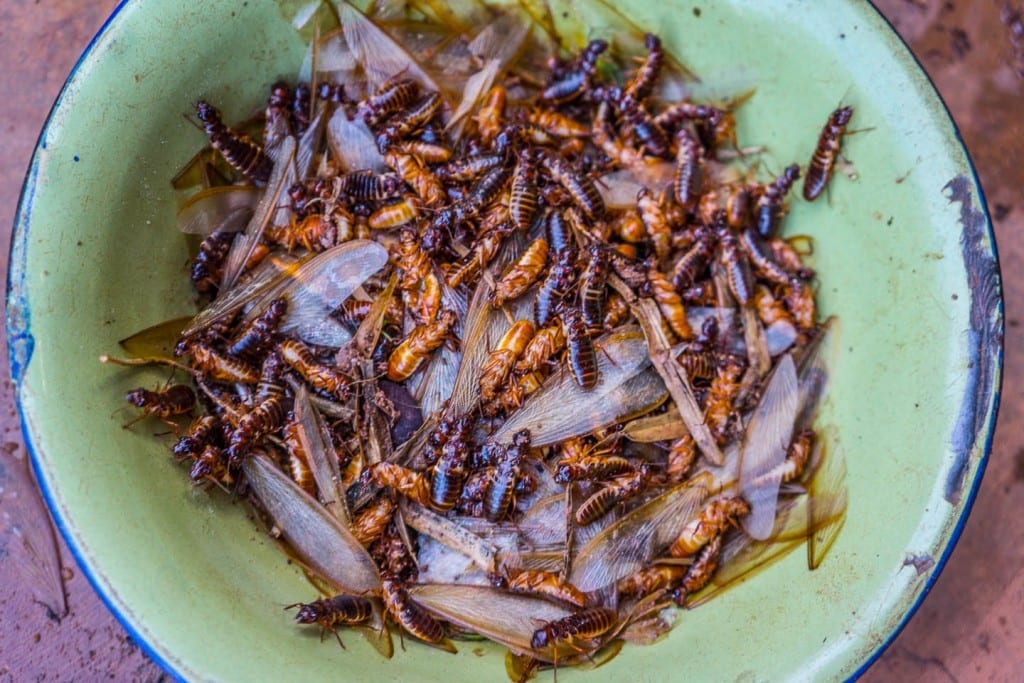 One of the main health benefits behind edible insects are the large amounts of protein found in these small creatures.


