Showing posts with label MEDIAZIONE. Show all posts

Friday, January 27, 2017

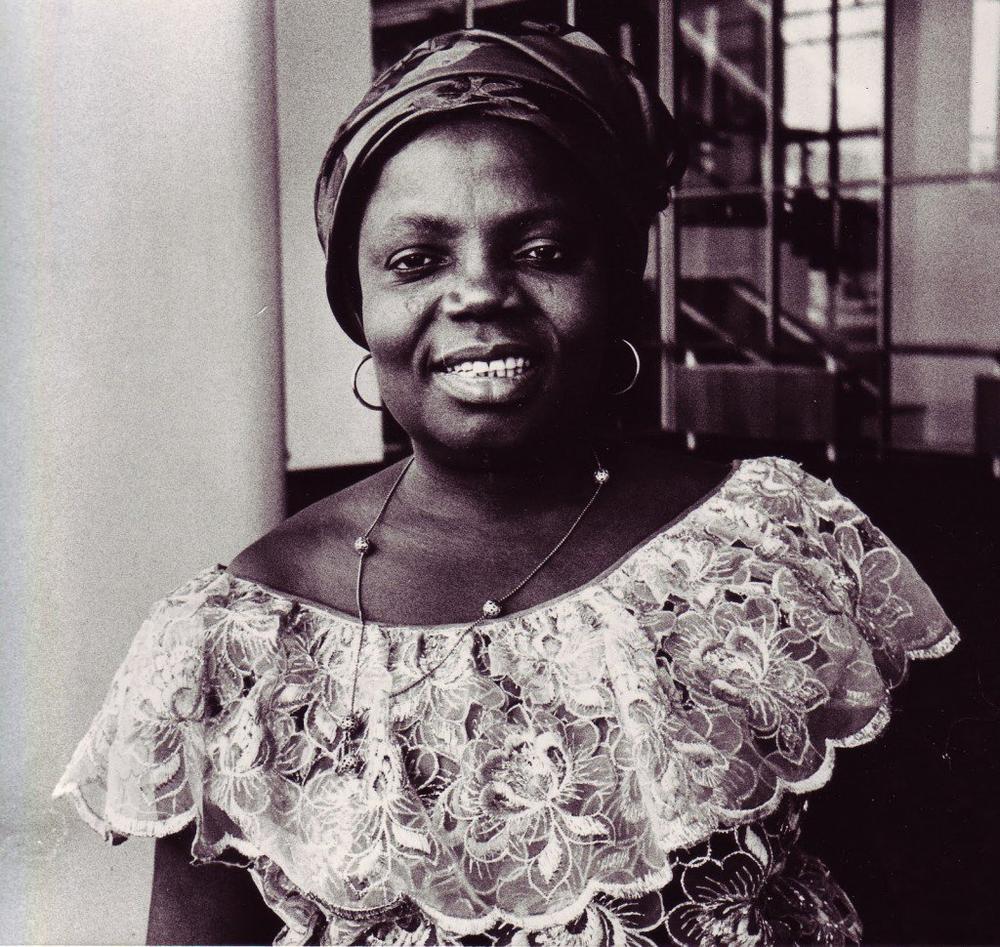
Nigerian Literary Icon Buchi Emecheta Passes On At 72


Nigerian Literary Icon Buchi Emecheta Passes On At 72


One of Africa’s most celebrated writers, Buchi Emecheta has passed on.
Buchi, born on July 21, 1944 passed on in her sleep on Wednesday in London.
Buchi, who has also written plays and an autobiography, published more than 20 books, including Second-Class Citizen (1974), The Bride Price (1976), The Slave Girl (1977) and The Joys of Motherhood (1979).
Following her success as an author, Buchi travelled widely as a visiting professor and lecturer. From 1972 to 1979 she visited several American universities, including Pennsylvania State University, Rutgers University, the University of California, Los Angeles, and the University of Illinois at Urbana-Champaign.
From 1980 to 1981, she was senior resident fellow and visiting professor of English, University of Calabar, Nigeria. In 1982 she lectured at Yale University, and the University of London, as well as holding a fellowship at the University of London in 1986.
She earned a BSc degree in Sociology at the University of London.
Among honours received during her literary career, Buchi won the Jock Campbell Award from the New Statesman in 1979, and was on Granta magazine’s 1983 list of “Best of the Young British Novelists”.
In September 2004, she appeared in the historic “A Great Day in London” photograph taken at the British Library, featuring 50 Black and Asian writers who have made major contributions to contemporary British literature. In 2005, she was made an OBE.
Condolences to the family.

https://www.bellanaija.com/2017/01/nigerias-literary-icon-buchi-emecheta-passes-on/?utm_source=dlvr.it&utm_medium=facebook

Wednesday, September 3, 2008

LA MIA RISPOSTA PER ORA.............

LA MIA RISPOSTA PER IL COMMENTO FATTO DA UN 'ANONIMO' NEI BOLG IN NLINK SOTTO.

http://chukbyke.blogspot.com/2008/09/tornare-in-nigeria-no-me-piace-qui.html?showComment=1220371560000#comment-c1817614040077941266

http://extracomunitari.blogspot.com/2008/09/tornare-in-nigeria-no-me-piace-qui.html


L'Orda quando gli albanesi eravamo noi
Scarica l'immagine

288 pagine

Compra on line
Quando gli "albanesi" eravamo noi, ci linciavano perché rubavamo il lavoro o facevamo i crumiri, ci proibivano di mandare i figli alle scuole dei bianchi in Louisiana, ci consideravano "non visibilmente negri" nelle sentenze in Alabama. Quando gli "albanesi" eravamo noi, truffavamo mezza Europa raccogliendo soldi per riscattare inesistenti ostaggi dei saraceni, vendevamo i nostri bambini agli sfruttatori assassini delle vetrerie francesi e agli orchi girovaghi, gestivamo la tratta delle bianche riempiendo di donne nostre anche dodicenni i bordelli di tutto il mondo. Quando gli "albanesi" eravamo noi, espatriavamo clandestini a centinaia di migliaia oltre le Alpi e gli oceani, seminavamo il terrore anarchico ammazzando capi di stato e poveri passanti, dormivamo a turno in quattro nello stesso fetido letto ed eravamo così sporchi che a Basilea ci era interdetta la sala d'aspetto di terza classe. Quando gli "albanesi" eravamo noi, ci accusavano di essere tutti criminali, ci rinfacciavano di avere esportato la mafia e ci ricordavano che quasi la metà dei detenuti stranieri di New York era italiana. Quando gli "albanesi" eravamo noi, ci pesavano addosso secoli di fame, ignoranza, stereotipi infamanti. Quando gli "albanesi" eravamo noi, era solo ieri. Tanto che in Svizzera pochi anni fa tenevamo ancora trentamila figli nascosti che frequentavano scuole illegali perché ai papà non era consentito portarsi dietro la famiglia.

Nella ricostruzione di Gian Antonio Stella, ricca di fatti, personaggi, avventure, aneddoti, storie ignote, ridicole o sconvolgenti, c'è finalmente l'altra faccia della grande emigrazione italiana. Quella che meglio dovremmo conoscere proprio per capire, rispettare e amare ancora di più i nostri nonni, padri, madri e sorelle che partirono. Quella che abbiamo rimosso per ricordare solo gli "zii d'America" arricchiti e vincenti. Una scelta fatta per raccontare a noi stessi, in questi anni di confronto con le "orde" di immigrati in Italia e di montante xenofobia, che quando eravamo noi gli immigrati degli altri, eravamo "diversi". Eravamo più amati. Eravamo "migliori". Non è esattamente così.

Sunday, August 31, 2008

ITALIA E LIBIA

L'amicizia libica costa cinque miliardi di dollari


Scritto da Angelo D'Addesio
domenica 31 agosto 2008
Image
...
E' stata un'amicizia dura da conquistare quella fra l'Italia e la Libia, ma a quanto pare sembra sancita definitivamente dal Trattato di Amicizia e Cooperazione, a suon di miliardi di dollari, ben 5, che l'Italia sborserà in modo scaglionato per i prossimi 25 anni al paese africano, come risarcimento compensativo per la pesante aggressione subita nel 1911 e perpetuata fino al 1943, durante gli anni del dominio coloniale.

In questo accordo Muammar Gheddafi ha sfogato tutto il sentimento di umiliazione suo e della popolazione libica, uccisa durante il biennio 1911-1912 in sanguinosissime battaglie nel deserto, oppure deportata nella repressione che ne seguì, in cui il 50% della popolazione civile furono spinti alla prigionia, alla fuga nel deserto ed al confino nelle isole italiane, tra cui numerosi parenti del leader libico, come il nonno ferito a morte ed il padre gravemente menomato. Eppure questo accordo sancisce anche il definitivo rientro della Libia nel panorama delle potenze africane emergenti sul piano economico, energetico oltre che storico, al fianco dell'Egitto, della Nigeria e del Sudafrica.

Dopo il grande isolamento, l'avversione degli Usa, gli anni della guerra fredda, oggi la Libia può contare sulla riappacificazione statunitense, su un seggio provvisorio all'Onu e sul rapporto di timore/rispetto con l'Unione Europea. Il rapporto con l'Italia, poi, è dettato da interessi reciproci che vanno molto al di là dei semplici corsi e ricorsi storici. L'accordo sottoscritto dal premier Berlusconi a Tripoli, configura non solo un risarcimento danni ma rafforza anche la serie di notevoli investimenti italiani in Libia: la costruzione della grande autostrada litoreanea Tripoli-Bengasi, lunga 2000 km per un costo di 6 miliardi, ricalcante la vecchia Via Balbia, la prima grande strada in Africa, di ideazione italiana, che unificava la Tripolitania e la Cirenaica, la costruzione lungo il tragitto di numerose infrastrutture, la costruzione di due nuovi grandi ospedali, la predisposizione di un piano di miglioramento scolastico con borse di studio per studenti libici in Italia ed indennizzi per mutilati di guerra e la restituzione delle opere d'arte trafugate in Italia, fra cui la Venere di Cirene, già consegnata durante l'incontro ed oggetto di un contenzioso chiusosi in favore libico, con una sentenza del Consiglio di Stato, il giugno scorso. Passi in avanti anche per la restituzione dei visti per i 20.000 italiani cacciati dalla Libia dopo il golpe nel 1970, sebbene i rimpatriati non siano del tutto in sintonia con la scelta del governo.

Dietro tutto questo, il cartello delle grandi imprese energetiche ed edili impegnate in fruttuosi accordi ed il rafforzamento del partenariato sull'immigrazione. Proprio lo scorso anno l'ENI ha ottenuto il rinnovo per 25 anni delle concessioni per l'estrazione di gas e petrolio e la medesima si farà carico dei costi per la costruzione di autostrada ed altre infrastrutture. Altri lavori coinvolgeranno Impregilo, Finmeccanica, perfino l'Università di Palermo che ha instaurato preziosi rapporti con quella di Bengasi. Infine l'ultimo grande contrappeso per l'Italia è il rafforzamento dell'accordo sottoscritto da Amato nel 2007, ovvero pattugliamenti congiunti di Italia e Libia nel canale di Sicilia e intensificazione dei controlli, anche a mezzo radar, ai confini con Ciad, Niger e Sudan, collaborazioni con guardia costiera e forze dell'ordine.

La guerra ai "mercanti di schiavi" passa per questo accordo, anche se fino ad una settimana fa l'emorragia di immigrati dalla Libia è proseguita ed un peschereccio con 48 persone è partito dalle coste della Tripolitania ed è stato riportato in Libia qualche giorno dopo e la soluzione dei respingimenti in mare non è umanamente la migliore, visto che il regime di Gheddafi non ha di certo mano tenera con i profughi che per legge sono destinati ai centri di detenzione per un certo periodo di tempo, dove solo quest'anno, sono finite 60.000 persone. La speranza è tutta in una cooperazione energetica ed in un aiuto efficace sull'immigrazione, nulla più della linea seguita dai governi precedenti. Solo il tempo potrà dire se sarà valsa la pena e se questo precedente non porterà Eritrea e Somalia in futuro (e non sarebbe uno scandalo, anzi l'Eritrea sembra intenzionata in questa direzione) a seguire l'esempio del vicino libico.

Saturday, August 30, 2008

Il ricongiungimento dei parenti di cittadini italiani

Le leggi:

Le attuali leggi in materia d'immigrazione (legge 30 luglio 2002, n. 189, pubblicata sulla Gazzetta Ufficiale n. 199 del 26 agosto 2002 e successive modifiche), meglio nota come Bossi-Fini che modifica la legge Turco-Napolitano (D.Lgs. 286/98 pubblicato sulla Gazzetta Ufficiale n. 191 del 18 agosto 1998 - Supplemento Ordinario n. 139), stabiliscono puntualmente le regole ed i procedimenti necessari a tutti i cittadini di paesi terzi per l'entrata e la permanenza nel territorio dello Stato italiano.

Le leggi citate impongono gravi limitazioni all'ingresso ed al soggiorno nel territorio dello Stato italiano per tutti i familiari di cittadini di paesi terzi regolarmente soggiornanti nello stesso; ad esempio, non è consentito il ricongiungimento del cittadino di paese terzo con i propri genitori che non abbiano compiuto i 65 anni e con altri figli residenti nel paese d'origine; non è consentito il ricongiungimento del cittadino di paese terzo con i propri figli se di maggiore età, etc. .

Le stesse limitazioni non trovano invece applicazione nel caso di cittadini di Paesi terzi familiari di cittadini italiani/comunitari, come si evince dai seguenti decreti:

  1. Decreto Legislativo 25 luglio 1998, n. 286, Art. 1 (Ambito di applicazione), comma 2. Il presente testo unico non si applica ai cittadini degli Stati membri dell'Unione europea, se non in quanto si tratti di norme più favorevoli, e salvo il disposto dell'articolo 45 della legge 6 marzo 1998, n. 40.

  2. Decreto Legislativo 25 luglio 1998, n. 286, Art. 28 (Diritto all'unita' familiare), comma 2. Ai familiari stranieri di cittadini italiani o di uno Stato membro dell'Unione Europea continuano ad applicarsi le disposizioni del decreto del Presidente della Repubblica 30 dicembre 1965, n. 1656, fatte salve quelle più favorevoli della presente legge o del regolamento di attuazione.

  3. Decreto Legislativo 25 luglio 1998, n. 286, Art. 30 (Permesso di soggiorno per motivi familiari), comma 4. Allo straniero che effettua il ricongiungimento con il cittadino italiano o di uno Stato membro dell'Unione europea, ovvero con straniero titolare della carta di soggiorno di cui all'articolo 9, e' rilasciata una carta di soggiorno.

  4. Il D.P.R. 1656/1965, oggi è sostituito dal DPR 54/2002, Art. 15. (Abrogazioni), comma 1. E' abrogato il decreto del Presidente della Repubblica 30 dicembre 1965, n. 1656.

  5. Il D.P.R. del 18 gennaio 2002, n. 54, Art. 3 (Diritto al soggiorno), comma 3. Per i soggetti indicati alle lettere a), b) e c) del comma 1, il soggiorno e' altresì riconosciuto, quale che sia la loro cittadinanza, ai coniugi, ai figli di età minore e agli ascendenti e discendenti di tali cittadini e del proprio coniuge, che sono a loro carico, nonché in favore di ogni altro membro della famiglia che, nel Paese di provenienza, sia convivente o a carico del coniuge, degli ascendenti del lavoratore e degli ascendenti del suo coniuge.

  6. Il D.P.R. del 18 gennaio 2002, n. 54, Art. 5 (Richiesta della carta di soggiorno), comma 4. con la domanda, l'interessato può richiedere il rilascio della relativa carta di soggiorno anche per i familiari di cui all'articolo 3, commi 3 e 4, lettera b), quale che sia la loro cittadinanza:

    • il coniuge non legalmente separato ed i figli di eta' inferiore agli anni diciotto;

    • i figli di maggiore eta' a carico, gli ascendenti e discendenti delle persone di cui alla lettera a) e del coniuge che siano a loro carico.

Applicazioni:

    Dall'analisi dettagliata dei decreti di legge citati emerge quanto segue:

    • I familiari di cittadini italiani e dei loro coniugi, qualsiasi sia la loro nazionalità, compresi genitori e figli di maggiore età, propri o del proprio coniuge e che siano a carico dello stesso, senza altre limitazioni, hanno diritto di ingresso nel territorio dello Stato italiano.

    • I familiari di cittadini italiani e del loro coniuge, qualsiasi sia la loro nazionalità, hanno diritto alla carta di soggiorno (CdS) se entrati per ricongiungimento con il cittadino italiano.

    Nota: restano comunque valide le limitazioni di accesso per comprovata pericolosità per lo Stato italiano nei confronti del cittadino straniero, che ne impedirebbero l'ingresso ed il soggiorno sia in materia di ordine pubblico sia sanitario, motivo unico per cui i cittadini di Paesi terzi sono comunque soggetti al rilascio del visto di ingresso.

Esempi pratici:

    • Il coniuge del cittadino italiano, che sia cittadino di Paese terzo, ha diritto al rilascio immediato della Carta di Soggiorno (CdS).

    • Dietro richiesta del cittadino italiano, i genitori del coniuge che sia cittadino di Paese terzo, possono essere ricongiunti nel territorio dello Stato italiano senza dover richiedere il nulla osta alla questura.

    • Su richiesta del cittadino italiano, i figli minori o di maggiore età del coniuge di paese terzo, possono essere ricongiunti senza nessun nulla osta della questura, con il consenso dell'altro genitore o dimostrando la sua assenza.

Carta di Soggiorno:

    La Carta di Soggiorno (CdS) è un documento rilasciato dal Questore che consente ad un cittadino di Paese terzo di soggiornare all'interno del territorio italiano ed ivi entrare ed uscire con condizioni simili a quelle di un cittadino italiano. La CdS consente inoltre l'ingresso nello spazio Scenghen senza bisogno del visto per periodi non superiori a 3 mesi.

    La CdS può essere di due tipologie, la prima a tempo indeterminato (di seguito CdSe), la seconda valida per un periodo di 5 anni e rinnovabile a tempo indeterminato (di seguito CdSc). La CdSe viene rilasciata ai cittadini extracomunitari che dimostrino la loro permanenza sul territorio per un periodo di tempo superiore a 6 anni; accade che la stessa CdSe venga rilasciata erroneamente a cittadini di Paesi terzi familiari di cittadini italiani, i quali hanno invece diritto alla CdSc. I familiari extracomunitari che siano familiari di cittadini italiani, in quanto tali, ereditano tutti i diritti dei cittadini comunitari.

    La CdSc può essere revocata solo per motivi gravi, pertanto la distinzione tra CdSe e CdSc non è solo accademica ed è importante che ai soggetti interessati venga rilasciata l'esatta tipologia.

Esempio pratici:

ricongiungimento dei suoceri minori di 65 anni con altri figli nel paese di origine;

    La richiesta di ricongiungimento deve essere fatta dal cittadino italiano direttamente al consolato italiano del paese terzo dei suoceri, dovranno essere presentati i seguenti documenti:

    • Modulo di domanda visto (richiedere Visto Nazionale tipo D valevole 365 giorni ingressi multipli);

    • Dichiarazione del cittadino italiano che desidera ricongiungere i suoceri;

    • Foto

    • Copia del CdS/PdS del coniuge del cittadino italiano

    • Fotocopia del passaporto dei suoceri

    • Fotocopia del documento di identità del cittadino italiano

    • Estratto dell'atto di matrimonio del cittadino italiano

    • Certificato di nascita con generalità del coniuge del cittadino italiano

    Il visto deve essere rilasciato nella stessa giornata o comunque entro pochi giorni dalla data di richiesta, come previsto dalle disposizioni del MAE in conseguenza delle disposizioni europee.

Le norme di attuazione del D.P.R. 54/2002:

    Voglio sottolineare il fatto che ad oggi non sono state ancora rilasciate le norme di attuazione relative al D.P.R. 54/2002, questo comporta l'attuazione della precedente disposizione del D.P.R. 1656/1965 con la quale non è consentito il ricongiungimento con i fratelli e le sorelle anche per il cittadino italiano.

Terminologia:

  • Cittadino comunitario: Persona che detiene la cittadinanza di un paese dell' Unione Europea;

  • Cittadino di paese terzo: Persona che non detiene la cittadinanza di un paese dell' Unione Europea;

  • Visto: targhetta adesiva da applicare sul passaporto del cittadino di paese terzo che autorizza quest'ultimo all'ingresso sul territorio di un paese dell'Unione Europea.

  • Permesso di soggiorno: Documento che dimostra la facoltà di un cittadino di paese terzo al soggiorno sul territorio nazionale per un periodo limitato di tempo e con alcune limitazioni rispetto al cittadino comunitario:

  • Carta di soggiorno: Documento che dimostra la facoltà di un cittadino di paese terzo (oppure di un cittadino comunitario cittadino di un altro stato membro dell'UE rispetto allo stato emettente la carta di soggiorno) al soggiorno sul territorio nazionale per un periodo prolungato o illimitato di tempo con parità di diritto rispetto ai cittadini comunitari;

  • Cittadino regolarmente soggiornante: Cittadino di paese terzo in possesso di un permesso di soggiorno o di una carta di soggiorno:

  • Ricongiungimento: procedura amministrativa con la quale la famiglia straniera di un residente in Italia (comunitario o di paese terzo) appunto si ricongiunge con quest'ultimo trasferendosi sul territorio nazionale;

“Scritture Migranti”.

29 agosto 2008


Senigallia (Ancona): inizia domenica la rassegna “Scritture Migranti”.
Si svolgerà fino al 13 settembre la terza edizione del festival degli scrittori stranieri immigrati in Italia.


Inizierà domenica 31 agosto a Senigallia (Ancona) il festival “Scritture Migranti” dedicato agli scrittori stranieri immigrati in Italia. La rassegna, giunta alla sua terza edizione, è organizzata da Cvm (Comunità Volontari per il Mondo), Associazione “Luoghi in Comune”, Scuola di Pace “V. Buccelletti” di Senigallia e Centro Servizi per il Volontariato, con la collaborazione del Comune di Senigallia.
Ospiti della manifestazione, in tre diverse giornate, saranno altrettanti scrittori stranieri che, vivendo già da anni in Italia, hanno deciso di realizzare una loro opera letteraria in italiano. Scrivere in inglese o in francese - spiega una nota degli organizzatori - significa farlo per una platea internazionale, comporre in italiano per scrittori migranti significa scrivere a sè stessi, in definitiva forse per poche persone, ma anche porre le basi per una nuova nascita, mettere radici in altro Paese. Il primo scrittore è l'eritreo Hamid Barole Abdu, operatore psichiatrico, saggista e poeta, che ha pubblicato due volumi di poesie (31 agosto). Seguirà il 6 settembre il marocchino Mohammed Lamsuni, poeta e traduttore ora residente a Torino, che collabora con numerosi quotidiani e riviste del suo Paese d'origine. Chiuderà la rassegna il 13 settembre il polacco Olek Mincer, regista e attore teatrale, che ha pubblicato il libro “Varsavia, Via Gerusalemme, 45”.
(Red.)
http://www.immigrazioneoggi.it/daily_news/2008/agosto/29_3.html

Saturday, August 16, 2008

Nigeria Cedes Bakassi To Cameroun


The Pains Of War

Nigeria Cedes Bakassi To Cameroun

2008/08/14
By Emma Una/ Calabar & Eromosele Ebhomele
The controversial Bakassi Peninsula has been formally handed over to the Republic of Cameroun.
The ceremony took place today, in Calabar, the Cross River State capital. Top government officials from Nigeria, Cameroun, representatives of the United Nations, the diplomatic community, etc. witnessed the ceremony.
The Nigerian delegation was led by the Attorney-General and Minister of Justice, Michael Aondoakaa. In his speech at the historic occasion, Aondoakaa said the handing over was a painful exercise. "We are saddled with the painful task of completing the implementation of the ICJ judgement," he said.
According to him, there are arrangements for the resettlement of those who have chosen to leave the peninsula, promising the Nigerian indigenes who would remain in the area that their fundamental human rights would be maintained.
While the Acting-Governor of Cross River State, R. Hon. Francis Adah, tasked the international community to assist in resettling the displaced Nigerians, who, he said, were already traumatised, the Camerounian minister of State for Justice, Professor Maurice Kamto, confirmed that his country would honour the Green Tree Agreement between the two countries. The United Nations Secretary General, who was represented, promised that the world body will support the displaced people and the governments of the two countries.
The hand over process started two years ago, at exactly noon on Monday, 14 August, 2006, when the Nigerian flag and that of the Nigerian Army were lowered at one of the islands, Archibong Town in Bakassi. They were handed over to the then Attorney-General of the Federation, Chief Bayo Ojo, and the former Chief of Defence Staff, General Martin Luther Agwai, while the Camerounian flag was hoisted. It was then the Bakassi people were first hit by the realisation of a possible hand over of their land to Caremoun. They had thought a miracle would happen to change the International Court of Justice's ruling in favour of Cameroun.
This ceremony became the first phase of the final hand over of the Peninsula extension of the territory of Calabar into the Atlantic Ocean with a population of between 250,000 to 300,000 people. The Republic of Cameroun had continually emphasised that the land belongs to it, capitalising on two agreements reached between it and the Nigerian government in the 1970s. The Yaounde II Declaration of 4 April, 1971, and the Maroua Declaration of 1 June, 1975, were devised to outline maritime boundaries between the two countries following their independence.
The line was reportedly drawn through the Cross River estuary to the West of the Peninsula, thereby implying Camerounian ownership over Bakassi which covers an area of 665sq kilometers. Nigeria never ratified the agreement and Cameroun regarded it as being in force and this prompted the ICJ ruling in the Hague on 10 October, 2002.
Despite the Green Tree Agreement between former President Olusegun Obasanjo and the Camerounian President, Mr. Paul Biya and the subsequent handing over process, a Federal High court sitting in Abuja put a hold to today's ceremony.
However, for the first time, citizens of the country think that President Musa Yar'Adua has gone against the rule of law. Even members of the House of Representatives think so.
The Chairman of the House Committee on Media and Information, Eziuche Ubani, said the National Assembly should have held on to the alibi of the Federal High Court, Abuja and remind the President of his beleif in the rule of laws.
"We didn't do our job at the National Assembly. There were things we could have done to stop the President from handing over our territory, at least for now," he said.
For the Senator representing Bakassi, Senator Bassey Ewah Henshaw, crying would not be enough to show the grief of the people. "Government has scathered my people all over the place. My people are all refugees everywhere with nowhere to call home," he said.
Noting that nothing has come out of the resettlement effort of the Federal government, the Senator said, "the people are very bitter against those people that have done them in. In time, the people will be able to identify the real people who have put them in this terrible condition."
According to him, the National Assembly was yet to ratify the ICJ judgement and the various agreements by the two countries.
Meanwhile, Dr. Ambrose Akpnika, a one time Commissioner for Health in Cross River State and the Mkpisong Ukara of Calabar, has described the proposed relocation of the Bakassi people to Ikang in Akpabuyo Local Government of Cross River State as a farce which is bound to fail.
Dr. Akpanika, who is a prominent indigene of Bakassi, said the people of Bakassi have lived in their present place of abode for over 200 years and have taken the Bakassi Island as their ancestral home, so it would be difficult to go where they don't know.
Akpanika, who is one of the Kingmakers in Efik Kingdom, said that for a people who have never known any other place as their home, they will resist any attempt made to move them in the name of relocation.
Speaking to P. M. NEWS in Calabar, Dr. Akpaniko said: "my stand on the issue is that there are Bakassi natives and there are also Bakassi people. People from all parts of Nigeria and from other countries who have lived in Bakassi for over 200 years, are called Bakassi people, they have no other home. Now you cannot ask these people to re-locate. But you cannot relocate Bakassi natives who are like the Aborigines Christopher Columbus saw when he went to America .
"But I think there is a contraption trying to remove the Bakassi people from Bakassi. Cameroon was given sovereignty over the land of the people of Bakassi.
"The question of moving them does not arise and the United Nations Charter did not stipulate that," he declared.
He said the people of Bakassi had made presentation to the Senate Committee earlier in the year asking for a stay in the handover but this has been overruled "and I think that they must have made up their minds already about the people of Bakassi and had given one thing that had never been mentioned by anybody."
Dr. Akpanika said the plan of those who are bent on relocating the people want to exploit the resources of the area.
"That Bakassi is full of manganese not just oil that they are fighting for. Those people might be looking at the Manganese and Manganese is a special metal some of which is used in making planes and space ships.
"So Manganese is more expensive than oil, so the people who are now trying to move the natives of Bakassi from their ancestral home to somewhere else are suspect.
"So what we say is that we trace the history of the people to know those who have linkage with Bakassi for some 200 years, those who have gone to Bakassi to do business and those who don't have homes.
"Above all, please, Bakassi natives cannot be relocated from their home land. We have islands that could be filled up for these people who have always done business in the river to resettle."
He asserted that the Calabar channel should therefore not be handed over just like that. "The Agreement that divides the channel into two for Nigeria to occupy one corner while Cameroon occupies the other corner and after five years Cameroon will take over completely, is wrong," he said.


Sunday, August 10, 2008

MORE STORIES....BAKASSI ETC

THE REPUBLIC OF AMBAZONIA

(British Southern Cameroons)

THE PROBLEM: ILLEGAL ANNEXATION BY LA REPUBLIQUE DU CAMEROUN

  1. The Facts: Ambazonia which was described as "The United Nations Trust Territory of the Southern Cameroons under the United Kingdom Administration" achieved the objective of Trusteeship Administration on 1st. October 1960 with the promulgation of the Southern Cameroon Constitution (Order-in-Council). This effectively terminated Ambazonia's trusteeship status. Ambazonia thus became technically an adult UN member and would have been formally so seated if administering authority had so requested the General Assembly.

  1. UN Plebiscite of February 1961 invalid: Once trusteeship was legally ended UN had no legal authority to conduct any plebiscite in Ambazonia. But UN still did.

  1. PURPOSE OF PLEBISCITE: To vest UN with a Mandate to do one of the following "Two Alternatives": either (a) merge Ambazonia into Nigeria or, or (b) united Ambazonia and Cameroon in a Confederation of Sovereign States (CSS). The terms of the proposed confederation appear on the UN plebiscite manifesto stipulating that each state has EXCLUSIVE COMPETENCE in all maters except that, in the Eight subjects specified therein, federal law would prevail over state law if there is a conflict.

  1. WHY AMBAZONIAS VOTED FOR CONFEDERATION: After stating that progress of the Cameroon towards independence had not fallen behind that of Nigeria, on the Southern Cameroons Britain stated that "the position of the Southern Cameroons is largely that of a Region within the Federation of Nigeria." UK memo to Trusteeship Council dated 06/18/1958. The memo went on to state that the Southern Cameroons would achieve Self Government in 1958. This being one of the objectives of Trusteeship Administration, its achievement legally terminated further trusteeship administration. From the legal standpoint the Southern Cameroons ceased to be a Trust Territory, but an independent country in 1958. Yet the original intention of annexing it to Nigeria motivated UK to suggest Two Plebiscites for the Southern Cameroons. One to find out if the country wanted to remain with Nigeria or secede from Nigeria. If they voted for secession then the second plebiscite would as if they wanted to join Nigeria or remain independent.

After the Chair lady of the African Block, Ambassador Angie Brooks of Liberia presented to the UN a declaration jointly signed by Prime Minister and Dr. EML Endeley Leader of opposition (who were then participating in the United Nations debates of the ordinary session starting September 1959) proclaiming the secession of Southern Cameroons from Nigeria, the UN cancelled the idea of plebiscite number One. The UN acknowledged the Southern Cameroons and recognized it as a self-governing and separate nation from Nigeria. Again that by itself legally ended Trusteeship and the Southern Cameroons became an independent nation. Accordingly, the UN caused an independent constitution to be worked out and was promulgated as THE SOUTHERN CAMEROONS C ONSTITUION ORDER-IN-COUNCIL. This came into effect on October 1, 1960. Yet the UK insisted in the Plebiscite number Two, but ensured that it was framed in such a way that the alternative to joining Nigeria was to join Cameroon Republic which was then been ravaged by the UPC guerrillas seeking to depose the French puppet President Ahidjo. The UK believes that the terrorism exuding from this war would make Southern Cameroons opt to get back Nigeria.

But for the following three reasons our people still voted against merging into Nigeria.

[a] FIRST, of all if the UN eventually succeeded in creating the proposed Confederation the terms of Union as spelt out in the plebiscite ensured that Ambazonia would continue to be a sovereign state and have 'exclusive competence' in all maters subject only to the fact that in the eight matters where the Federal government was allowed to legislate its legislation would prevail in the event of a conflict with State legislation. Thus even in those subjects the states had concurrent jurisdiction with the Union government. Ambazonia would thus retain her sovereignty and exclusive competence over all else including her currency, the issuing, valuation and revaluation of same; while Cameroon would continue to depend on France which to this day constitutes the central Bank for Cameroon and issues, values, devalues and revalues currency for Cameroon.

[b] SECONDLY, at the post-plebiscite United Nations Conference which would draw the draft union constitution, all that the Ambazonian delegation needed to ensure the continued independence of Ambazonia, would be to make sure that there is no agreement on the draft federal constitution, or just walk out, or boycott it.

[c] THIRDLY, the draft, if at all agreed upon, would (the ratification clause according to the Plebiscite Manifesto) be submitted to the people to express their opinion for or against it. Thus once the Ambazonian people voted against it, there would be no union with Cameroon.

5. WHY UNITED NATIONS DROPS THE PLEBISCITE

    The United Nations, on April 18, 1961 passed Resolution 1608 [XV} GAOR which: (a) Appointed a Commission to implement the said Plebiscite mandate, (b) Fixed October 1, 1961 for formal end of the presence of the UN Administration in Ambazonia, and then (c)On realizing that the objectives of the Trusteeship having been achieved (accordingly; [i] self-government in 1958 and [ii] independence in 1960), realized that the only legal authority which the UN had over the territory had ended. It was then argued that the UN had no legal authority for ever organizing the said plebiscite in the British Southern Cameroons at all.

    That for the following two reasons the idea of creating a Union between the territory and the Republic of Cameroon must be dropped.

    1. The creation of a union fell totally outside the objectives of trusteeship stated in United Nations Charter Article 76(b);
    2. There being no legal authority for the plebiscite the mandate thus obtained was invalid and could not be implemented. That, the Southern Cameroons, as every other independent nation, should be left to determine its relations with other nations by itself.

Accordingly, the United Nations Commission appointed for working out the draft constitution for the proposed Confederation was dropped, but the date line of October 1, 1961 for United Kingdom to leave Ambazonia remained unchanged.

  1. THE ILLEGAL ANNEXATION OF AMBAZONIA

    1. On September 1, 1961 (i.e., a month before UK ceased to be agent of the UN in Ambazonia), the President of the Republic of Cameroon promulgated a constitution which suppressed the Southern Cameroons Constitution and assumed the powers of the Queen of England as Head of State of British Southern Cameroons.
    2. Franco-Cameroon troops moved into British Southern Cameroons and took over positions held by the British troops.

    (c ) Finally on October 1, 1961, when their role as the UN Administering agents formally ended, the Queen's representative as Head of State of Ambazonia was transformed into British Consul to The republic of Cameroon with residence in Buea (Capital of Ambazonia) All these happened while the British were still formally the United Nations Trusteeship Administering Authority.

  1. THE AMBAZONIAN CASE as presented BEFORE THE INTERNATIONAL COURT OF JUSTICE which was rejected, is still the same CASE BEFORE THE INTERNAIONAL COMMUNITY, that is, if the rule of the law is to prevail

In 1994 Nigeria and Cameroon troop clashed over the oil rich Bakassi peninsula which was part of, and still part the Southern Cameroon. Recall the Bakassi people participated in the UN organized Southern Cameroons plebiscite as a region of the Victoria Plebiscite District. Cameroon's reaction was to immediately sued Nigeria at the International Court of Justice [ICJ] asking for Nigeria to withdraw its troops and pay reparation for its 'armed aggression".

SOME BACKGROUND ABOUT THE AMBAZONIAN MOVEMENT:

About a decade earlier, an Ambazonian Restoration Council [ARC] lead by the first President of the Cameroon bar Association, and Traditional ruler, Fon Fongum Gorji-Dinka, lunched a pacific and legalistic struggle for the restoration of the independence of Ambazonia. As may be expected the Fon, Fongum Gorji-Dinka was imprisoned without charge nor trial, but in reaction to international protests, Biya set him before a military tribunal and demanded the sentence of death by firing squad. When the tribunal acquitted him, Biya rearrested him and placed him under house arrest from where after more than two years; he made his escape to neighboring Nigeria. There the UN and Nigeria government accorded him protection as a political exile.

Back at home, the struggle continued with one of ARC founding fathers, John Fru Ndi, veering off to seek a 'democratic-based' solution from inside Cameroon by forming the Social Democratic Party [SDF]. The early SDF was a nationalist movement who catered to the people's aspiration for independence by rationalizing the incremental "hidden agenda" strategy. Its simplistic assumptions, devoid of any legal anchor, assumed that Ambazonians {Southern Cameroonians} could still be able to gain their independence by encouraging Cameroonians to accept and practice democracy. While all these were gaining momentum inside Cameroon, the ARC on the advice of foreign diplomats, filed at the United Nations in 1990 the formal Independence Proclamation of Ambazonia, with Fon Gorji-Dinka as Head of State of Ambazonia. There Ambazonia applied for her seat as a UN member state and demanded for the UN to end Cameroon annexation of Ambazonia.

To further provide evidence of having exhausted domestic remedies, Ambazonia, in 1992, file a law suit before the Mezam Division of the High Court of the Republic of Cameroon against Cameroon illegal and forcible occupation of Ambazonia. The Court located in Bamenda passed a judgment in favor of Ambazonia. It declared that Ambazonia is now a sovereign state illegally and forcibly been occupied by the Republic of Cameroon. The estoppels judgment of the Court also made an order for Cameroon to withdraw from Ambazonian territory to which the Cameroon's President Biya has ignored to this day.

In May of 1995, taking advantage of Article 62 of the ICJ Charter, Ambazonia filed an intervention in the Cameroon-Nigerian litigation over the Bakassi Peninsula at the ICJ. In it, Ambazonia challenged the basis of Cameroon's claim of sovereignty over Ambazonia, which Cameroon acknowledged to be the real owner of Bakassi peninsula. In a word, Cameroon, now aware that the confederation no longer exist, which is the only way they can have any legal claims over Bakassi, in its ICJ application, made the false claim in having Ambazonia's mandate to sue Nigeria over Bakassi. Ambazonia's intervention not only deprives Cameroon of that false claim of Ambazonian's mandate, but has also totally deprived Cameroon of even the right to have commenced the litigation against Nigeria.

CAMEROON'S CASE

    1. That Bakassi belongs to Ambazonia.
    2. That Ambazonia opted in the UN Plebiscite of 1961 for ANNEXATION by Cameroon.
    3. That Cameroon now owns Bakassi
    4. That the previous Nigerian-Cameroon accords, estopp Nigeria from taking her present position on the Bakassi boundary dispute.

    JURISPRUDENCE QUESTIONS

    QUESTION 1: Was the United Nations sanctioned Plebiscite of 1961 for the annexation of the Southern Cameroons {Ambazonia}?

    ANSWER: (a) NO!.... By just the terms of the UN Manifesto, the TWO ALTERNATIVES, it envisaged but for a CONFEDERATION of SOVEREIGN STATES (CSS) to be called 'Federal United Cameroon Republics' to take effect only after both States have ratified the new constitution. (b) Recall, the "plebiscite' all by itself was an illegal enterprise and therefore non-binding to Ambazonians. Reasons why the UN dropped out of the "implementation segment" of its mandate because the plebiscite which gave it authority was illegal and therefore non-binding to all parties.

    QUESTION 2. Can Nigeria still be able to stand on the side of the law and bring peace and justice to bear in this Gulf of Guinea region?

    ANSWER: YES! By taking a stand on the side of the law and recognizing the extinction of the Cameroon Federation and, Ambazonia as the successor state of the now defunct Southern Cameroons --the last legal entity owning Bakassi. Nigeria should be able to take this position now in the post ICJ judgment era, to recover from the mistake they made in 1995 when their arguments did not account that the Cameroon federation had long been extinct since 1984. This is all more important since right from the start of their case, Nigeria knew there was to be no way it could have easily nullified the several Cameroon-Nigeria boundary accords signed by previous Nigerian Heads of States according Bakassi to what it though was a "Federated" Cameroonian state!

    Again, as it is with the Greentree Agreement [GTA] of 2006, an opportunity exist for Nigeria to stand on the side of the law when it should invoke Article 6(2) to prove that the "Republic of Cameroon" cited as the country to receive Bakassi is the wrong country. Indeed a country that has perpetuated a FRAUD for so long, must be exposed if Nigeria wants its standing as a progressive African super power to hold!


    Nigeria will have to state the facts as-is, that as of the extinction of the Cameroon Federation in 1984, the Republic of Ambazonia is the country which has title to Bakassi and not the Republic of Cameroon.
    Unless Nigeria stands by the law which deprives Cameroon of its claim of sovereignty over Ambazonia, which gave it right to sue Nigeria, Nigeria will soon be handing Bakassi but to the wrong country and by that committed a double jeopardy injustice!

    It is therefore the responsibility of ALL PEOPLES OF GOOD WILL to get this message of TRUTH and JUSTICE out to the open as your own 'little', but significant contribution to PEACE in this tri-state Gulf of Guinea region. The TRUTH is that Cameroon today is occupying AMBAZONIA, and that the bases of Cameroon claims of sovereignty over Ambazonia is palpably false and totally invalid, and so her very right to have even commenced any litigation against Nigeria on Bakassi is invalid and not recognized by law.

    Post script

    Those who advocate that Ambazonia must remain part of Cameroon regardless of the FACTS are simply talking because Cameroon has the "power" advantage as of now. They TRUTH is they will never be able to proof their case anywhere in any court and they know this, reason Cameroon will continue to play the political obfuscation card. The only thing going for them is the default power disequilibrium which as of today still favors Cameroons. But as in all system dynamics this "unstable" state property must seek equilibrium along its two logical options. Either:

    (2) In the total independence of what use to the Southern Cameroons (Ambazonia).

That there can be no middle ground is more reason for all people of good will to take a stand for the JUSTICE….for the PEACE….for the rule of the law. By doing this you would have taken a stand for the TRUTH.

(SENT BY.... Edwin N. Ngang)

Saturday, August 9, 2008

DEFENCE PACTS...BAKASSI

The handing over of the Bakassi peninsula to Cameroon that may take place on the 14th of this month is a sad story especially for the inhabitants who we all know dread the Cameroonian government; Resettling them in an already inhabited community is also a bad choice by the FGN.

Going over the whole story of the Bakassi people and mistakes made by all concerned is just as painful as the wound, however, .the most painful of all is the crying of Nigerians which is summarized by these words from The Chief of Defence Staff, General Owoye Azazi,"……..I want to believe that if anything happens between Nigeria and Cameroon, the defence treaty between France and Cameroon would be called to force. They have such treaty with their former colonies. We don't have defence treaty with any country; we only have training agreements……………………" http://allafrica.com/stories/200807170436.html

In another interview a Nigerian officer bemoaned our stars because our defence agreement with Britain is worthless according to him. Is it not shameful that at this 'age' Nigeria or any African country should cry because she has no OYIBO (Whitman) to rush to help her beat-up her neighbouring African sister? It is a shame.

In the '80s before the sell out of the peninsular by those we know, the Nigerian armed forces (Army, Navy and Air force) did a spectacular military manoeuvre in that area (operation Sea Dog) probably to send a massage to Cameroon or to show 'we can be pugnacious at times if you step on my toes'. I lived in Enugu then, and we were all proud of the military movements/shipments toward Calabar area , but also wished those 'idle soldiers' did some other important social work for the community instead of going to play war games, eating fish pepper-soup and beer in Calabar creeks.

France did not waste a day in sending a matching force to Cameroon. Mirage jets started flying over the air spaces of Cameroon and we learnt even provoking the Nigerian military manoeuvres inside Nigeria spaces. The planes were taking off from an Aircraft carrier because the never cared to build any airport fit for such crafts for their ex-colonies and friends.

Now Nigeria is mourning because France wont allow her beat up Cameron and Britain may not come to our side to assist us because we do not have an 'all inclusive' defence pact with the Queen.

On the other hand Cameroon is happy because 'now our master is at the corner waiting for those big fools from Nigeria to cough loud in our direction….. after all said and done through them and their (ELF) oil company , the petroleum in Bakassi will soon make us better than Nigeria- that prodigal son of Africa"

These deep-rooted colonial mentality at his century is the most worrying aspect of this Bakassi issue.

Why must we at this age allow the colonial wolves come back to show us our boundaries. Is it of whose interest that these boundaries are shifted right or left?

It is a shame ladies and gentlemen.

Africa must wake up! It is not yet late.
Chukwubike .O Charles
( Cultural Mediator)
Foundation for Peace culture & Social Development (fpsd)

Wednesday, August 6, 2008

3° seminario dipendenze

Si invia in allegato prima comunicazione per il 3° dei quattro Seminari che si terranno nel corso del 2008, finanziati (anno 2007) dalla Presidenza del Consiglio dei Ministri - Dipartimento Politiche Antidroga e previsti dall'Accordo con l'Az. USL RMH.
L'incontro su "DIPENDENZE E IMMIGRAZIONE: percorsi possibili" si terrà lunedì 15 settembre 2008, dalle ore 8,30 alle ore 18,00, alle Scuderie Aldobrandini, Piazza Marconi 7, Frascati (RM) e vuole essere occasione per approfondire, riguardo la popolazione immigrata affetta da dipendenze patologiche da sostanze legali ed illegali, le specificità di vissuto e le possibilità di intervento.
All'evento sono invitati gli operatori del terzo settore e dei SerT del Lazio, oltre ai Comuni del territorio dell'Azienda ASL RM H.


per la segreteria organizzativa
assistente sociale
laura bigiarelli


COMMENTS

SHAITSU

SHAITSU
Il massaggio Shiatsu che si effettua tramite la pressione delle dita, dei palmi delle mani e dei piedi e dei gomiti su tutto il corpo, agisce sui punti energetici considerati dall'agopuntura. Stimola la circolazione sanguigna ed il flusso linfatico, agisce sul sistema nervoso allentando la tensione muscolare più profonda, rimuove le tossine dei tessuti, risveglia il sistema ormonale e sollecita la capacità di autoguarigione del corpo.

FeedCount

Live Traffic Feed

Followers